Showing posts with label visit Scotland. Show all posts

Monday, 9 March 2015

Then and Now - The Photography Competition


We have an exciting competition which will be running throughout the spring and summer this year. We all love to revisit places we went as a child and see how much they have changed but also how much they have stayed the same.

If you have traced your family tree and visited the house your great-grandmother lived in you may have well felt quite emotional when you realised the step you were standing on was the one she would have washed 100 years ago.

The Scottish Indexes competition asks you to revisit these places and take a modern-day photograph which is based on an historical photograph. You can either use one of your own family photographs that was taken over 30 years ago, or choose one from our flickr archive (which is over 30 years old). The modern day photograph must have been taken this year and by you.

There will be five opportunities to submit a photograph, the closing dates will be the last days of the months of April, May, June, July and August. The winner each month will receive a genealogy ‘goody bag’. The prize will always include an hour of our research time as well as other genealogy gems to help you along your way.

How to enter:

Email your photographs to emma@scottishindexes.com

If your modern day photo is based on one of our flickr photos please tells us.

April submissions can be made from midnight GMT on 1st of April until midnight GMT on the 30th of April
May submissions can be made from midnight GMT on 1st of May until midnight GMT on the 31st of May
June submissions can be made from midnight GMT on 1st of June until midnight GMT on the 30th of June
July submissions can be made from midnight GMT on 1st of July until midnight GMT on the 31st of July
August submissions can be made from midnight GMT on 1st of August until midnight GMT on the 31st of August

Your modern day photograph does not have to be taken in the month you submit the photo.

How to win:

Photographs will be rated on accuracy, try to take the photo from the same place and angle that the original was taken. If you can’t because the photo was taken from somewhere inaccessible, such as private property, or somewhere unsafe, such as the middle of a road, let us know and we’ll take this into consideration. Keep yourself safe and don’t break any laws just to take a photo!

We’ll also be looking for a well exposed photograph, a higher quality photo is more likely to win.

We’re also looking for what I call ‘interestingness’, that is a photo that makes me go wow!

Finally, if you have a story to go with the photo, tell us. There is nothing like some tugging at the heartstrings to make make us give you some extra points.

Terms:

The photo must be taken in Scotland.

By submitting a photo to this competition you will be giving us permission to use your photos (old or new) on our Facebook page, our website etc. By entering the competition you will also be agreeing to us publishing your first name online as the winner of the competition.

You may enter up to 3 times over the course of the 5 months.

Saturday, 8 February 2014

Scottish Towers and Castles

We have been adding towers to our flickr photo archive recently and plan to continue to do so as we tour these ancient ruins.


Before I proceed though I feel I have to dispel a few myths.


  1. Just because a tower was built by a person with your surname does not mean your ancestors, or in fact anybody related to you, ever lived in it. If you're planning a trip to Scotland visit the towers and castles, because they are magnificent, but do a little extra research and find out where your family actually lived. It may be less glamorous, but it's your real history!
  2. Not all the towers were inhabited. Do a little research to find out the history of particular towers. The Historic Scotland website and the Royal Commission the the Ancient and Historical Monuments of Scotland (RCAHMS) website will help you to find the real history.
  3. You don’t always need to pay to visit a tower. It’s true to say that charges are made for many, but not all and it doesn't necessarily follow that it’s the good ones you have to pay for. Some really magnificent towers are free to explore. This is particularly good if you are visiting Scotland with your family. Here’s some free tower houses to visit:


You can search the Historic Scotland website by region, cost and opening. Some of the sites are only open during the summer months.


There are of course many more Castles or Towers you do have to pay to enter. The entry fee helps to preserve and restore these ancient sites. You can ‘join’ Historic Scotland and then receive free entry to their castles (including Edinburgh and Stirling Castle) as well as receiving a magazine and half price entry to 500 heritage attractions in England!


If you’re reading this thinking you would rather have somebody plan your trip for you so all you have to do is arrive and join in the fun, visit Borders Journeys and Ian Walker will help you plan your trip!


Wednesday, 29 January 2014

Visit Scotland and take a walk in your ancestors' footsteps


To most people tracing their family history means more than just finding out dates and names and putting them on a chart. It means understanding your ancestors’ lives, having the ‘Who Do You Think You Are?’ experience.


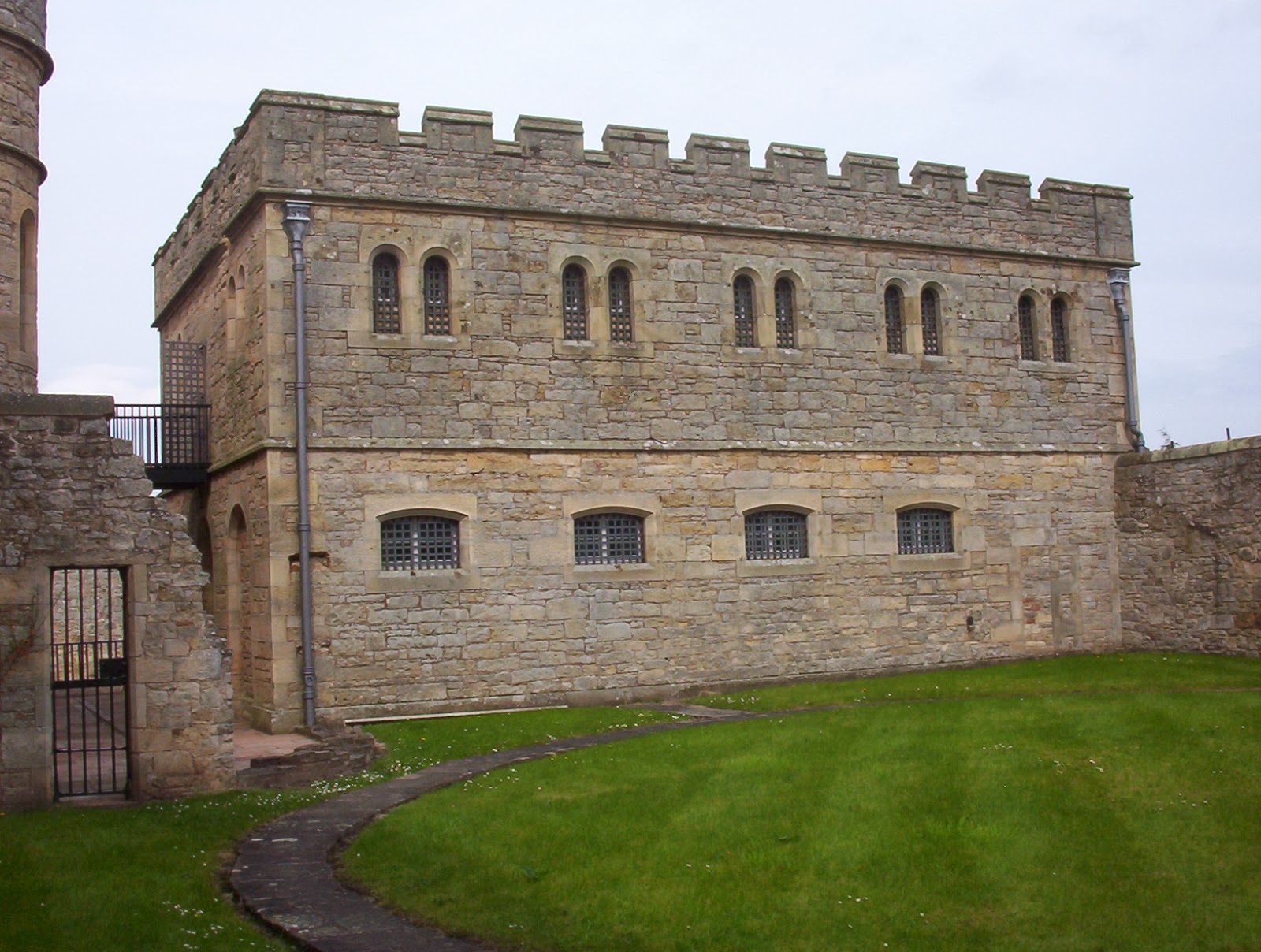
Jedburgh Castle Jail
2014 is a great year to visit Scotland and discover the place ancestors called home. You may find that the area they lived is not what you had in mind. When you think of Scotland do you think of clans and tartan? Well there is much more to Scotland than that. In fact if your ancestors were from the south of Scotland they probably never wore a kilt in their life! That doesn’t mean however that the south has any less of a rich heritage, rather your history is just different.


So what was life really like, how can you find out?


A good place to start is finding out where they actually lived. Can you pinpoint the house? Agricultural labourers moved around a lot, so you may not be able to find every house. Of course, some may no longer be standing. By using the National Library of Scotland’s excellent collection of online maps, though, you can often find the house they lived in. We have linked a lot of the census entries we have transcribed to maps, so use our census collection to help you. If you can’t work it out e-mail us and we can help.


What else?


You may be able to find their final resting place. The Borders Family History Society has an online Gravestone index (surnames only) from which you can purchase a book with more information. These help you find the grave so that you can visit it when you come over.


Local museums

There are lots of small local museums, often run by volunteers who can tell you the ‘true’ history of the place. Most towns have their own museum, run by the local council and admission is free. Here are some excellent ones we have visited:


Jedburgh Castle Jail


Walk through the old cells
If you have found your ancestor in our prison database you may be able to visit the jail they were locked up in! Jedburgh Castle Jail gives you a real taste of life behind bars. You can even walk round and round the exercise yard!


Historical customs - Loupin' Stanes


Named the Loupin' Stanes because of the somewhat dangerous custom of young men leaping from one to another to prove their love to their girl and gain her hand in marriage! A custom long since stopped as too many legs were broken! This site is on the Eskdale Prehistoric Trail.

Old Towers


Today people visit Scotland for its peace and tranquility, but it was not always thus! Peppered across the south of Scotland are the remains of towers, places where you could run to for protection.


Perhaps you ancestor was out ploughing their land, their family inside a wee thatched house, long since gone. Over the hill in the distance they see the glint of sun reflecting against armour. There is no way they could be safe in their home, they would run to a tower for protection.

You can still visit these today, sit at the window and imagine how it would have felt to be cooped up with animals, open drains, no running water and the rain driving against the wall!


Some of these are preserved now by Historic Scotland, others are on private land. Most landowners, though, are more than happy to give access, ask somebody who lives nearby and they can often point you to who owns the land so that you can arrange to get a key (if necessary) or show you around.

These are just some of the lesser known sites I know of, every local area has their own hidden treasures. Come home in 2014, get off the tourist route and visit the land of your ancestors.

Friday, 3 January 2014

Census Mapping

Graham has begun adding map links for Berwickshire to our census database. We already link each household in our Roxburghshire, Peeblesshire and Selkirkshire 1841, 1851 and 1861 census to both modern Google maps and historical maps (courtesy of the National Library of Scotland who have an exceptional online collection of maps).

Here's how it works:


Search our census (this time I am searching for Robert Fairbairn born around 1800).


Choose your family from the results.


You will now see a full transcription and links to Current Map/Satellite (this is Google Satellite imagery), OS (Ordnance Survey) 6 inch Map (19th C) and OS (Ordnance Survey) 25 inch Map (19th C). I would recommend looking at the modern map first.


You will now see a pointer showing where the house was/is and you can also click the little yellow man and drag him to see the house on Street View (if the area has been covered by Street View of course).


The map links open a new tab on your browser so that you can easily go back to the transcription and select another map. Then using the modern map you can locate the house on the old maps too!


We have now mapped Peeblesshire, Roxburghshire, Selkirkshire and Cockburnspath Parish, Berwickshire. Subscribe to my newsletter to keep up-to-date with the mapping project or follow Graham (the map man) on Twitter