According to Tourism Intelligence, ‘10 million people with Scottish roots are interested in finding out more about their ancestry. It is estimated that 4.3 million people could be encouraged to visit.’
This blog post has been specifically created following the #DGHour we had on Twitter in August 2014 and is designed to help those in the tourism industry help people trace their family tree. I hope however that it will also help individuals tracing their Scottish family tree.
Heritage Tourism or Ancestral Tourism
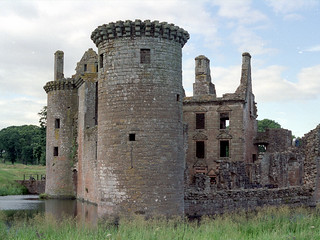
One thing to mention at the outset is that there is a difference between what we might call ‘heritage tourism’’ and ‘ancestral tourism’’. As an example, some people with the Maxwell surname may choose to visit Caerlaverock Castle, because (I quote from the Historic Scotland website) ‘around 1220, Alexander II of Scotland, needing trusted men to secure the Scottish West March, granted the estate to his chamberlain, Sir John de Maccuswell (Maxwell). Sir John built the ‘old’ castle. Within 50 years, his nephew, Sir Herbert, had moved to a new castle just 200m away to the north. There the Maxwell lords remained for the next 400 years.’ The reality is however, that many people with the Maxwell surname are not directly descended from these Maxwells.
One dictionary definition of genealogy is ‘A line of descent traced continuously from an ancestor’.
Your first mission, therefore, is to find out what type of experience your visitors want. Do they want to visit a castle once owned by someone of the same surname, or do they want to trace their own direct ancestors one by one as far back as they can?
If they want to trace their own genealogy, here are some resources and tips so that you can be better placed to help them:
Accommodation - What to offer the Ancestral Tourist
A good internet connection - A lot of family history research is done online these days. Many people will have their family tree online on websites like ancestry.com. This means a good internet connection is essential to family history research. If you can offer this as part as your accommodation package the ancestral tourist will likely find your accommodation a more appealing choice.


Reference books - For south west Scotland, I would recommend the guide produced by the Dumfries and Galloway Council, ‘Researching Local History - A Guide’ (available at £5.99 from most D&G libraries). I would also recommend the book ‘Tracing your Scottish Ancestors’ published by the National Records of Scotland. Other books such as ‘The Surnames of Scotland: Their Origin, Meaning and History’ by George Black may also be useful to visitors. If you want to have an even larger library for your visitors I would also recommend the books by Chris Paton.
Visit Scotland’s Ancestral Welcome Scheme - Participation in the Ancestral Welcome Scheme gives you the opportunity to publicise your knowledge and commitment to meeting the needs of the ancestral visitor. For more details see the Visit Scotland website.

Scotland’s People - www.scotlandspeople.gov.uk is the foremost website used in researching Scottish Ancestors online. They give access to the key building blocks of a family tree: Birth, Marriage, Death, Census and Parish Records as well as wills and some other key resources. The website is a ‘pay-per-view’ site (not a subscription website). Scottish libraries sell half price starter cards, giving 60 credits which can be used on the site for just £7 (the standard price is 30 credits for £7).
Once your visitors arrive
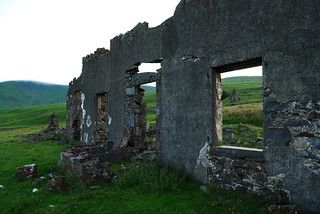
Maps - People visit the area where their ancestors lived is to visit the homes they once occupied and visit their graves. If you are able to offer help by supplying maps this would really help your visitors. The National Library of Scotland has a fantastic collection of historic maps (many of which can be overlaid on modern maps for comparison) which could help them work out where a long demolished house once stood.
Archives - At the time of writing (August 2014) the main archive for Dumfries and Galloway is within the Ewart Library (Catherine Street, Dumfries, DG1 1JB). Access is free and you can use your digital camera to photograph many records (permission needed). Here are the opening times:
Archive Search Room Opening Times
Monday- CLOSED
Tuesday - 10.00 - 13.00, 14.00 - 17.00
Wednesday - 10.00 - 13.00, 14.00 - 19.00
Thursday - 10.00 - 13.00, 14.00 - 17.00
Friday - 10.00 - 13.00, 14.00 - 17.00
Saturday - 10.00 - 13.00, 14.00 - 16.00 (First Saturday in month only)
Important - Most archive material is stored off-site, you need to contact the archive a day or two in advance so that they can make sure the items you need are brought in for you.
The archive at Dumfries has records such as school log books, poor relief applications and minutes, valuation rolls and newspapers throughout D&G. They also have copies of the census for D&G on microfilm and also local pre-1855 parish records (OPRs). As well as providing access to these key resources they also have a genealogist who can help searchers; there is a fee for this service and booking is essential.
 |
| Dumfries Archive in the Ewart Library |
Other archives and museums - Whilst the Ewart Library is the main repository, local museums and libraries throughout D&G can also be useful. They sometimes have original records, and in many cases have key resources in the form of printed transcripts and microform. Most importantly, though, they can provide local knowledge! This map can help you find archives across Scotland. The guide book published by D&G council that I have already mentioned (Researching Local History - A Guide) includes a comprehensive list with contact details.
Online Indexes
Friends of the Archives of Dumfries and Galloway - A lot of work has been done by the Friends of the Archives of Dumfries and Galloway group to index historical records. These indexes include the 1851 Census, Dumfries Jail books, various Kirk Session Minutes, Poor Board Minutes and much more. All indexes are free to access from the archive’s website.

Scottish Indexes - Our own website www.scottishindexes.com has census indexes, prison indexes, patenity indexes, mental health indexes, as well as birth, marriage and death indexes.

Gravestones - The website www.kirkyards.co.uk has free online access to gravestones or Monumental Inscriptions for a number of churchyards in the Stewartry of Kirkcudbright. Its sister site www.kirkcudbright.co has an historical index of the people and places of the Stewartry of Kirkcubright and other useful local resources.
Family History Societies and Researchers
Dumfries and Galloway Family History Society - The society is run by volunteers and has its premises in Glasgow Street, Dumfries. The opening times vary between summer and winter so it’s best to look at their website for details. As well as being able to visit the research centre and use their resources you can also buy their publications.
Dumfriesshire and Galloway Natural History and Antiquarian Society - This society is perhaps more immediately thought of by the historian than the genealogist but as they are so closely connected I have included them in this list. Their website has an index to their transactions and many volumes are online.
Scottish Indexes - Most people these days are able to trace their own family tree, sometimes however they need some help. As well as providing indexes we also have a research service. Feel free however to give us a quick ring if you have people coming to stay and you need some advice on how to help them.
Scottish Genealogy Network - This is a group of professional genealogists working across Scotland. For more information see their blog.
If you have any questions please post a comment below and I’ll do my best to answer it.


