Showing posts with label Emma Maxwell. Show all posts

Monday, 14 March 2016

SAFHS Conference and Family History Fair 2016

We are looking forward to the 27th “Scottish Association of Family History Societies (SAFHS) Conference and Family History Fair” which will take place this year in the wonderful conservation village of New Lanark on Saturday 23 April 2016.

The SAFHS conference is always a highlight in the genealogy calendar. There is a long list of exhibitors and an interesting selection of talks. The theme for the day is "Heritage along the Clyde" so the event will be of particular interest to you if you had ancestors who lived and worked along the banks of the Clyde river.

Emma Maxwell, genealogist
at Scottish Indexes, will be speaking on the
subject ‘Understanding Our Ancestors -
 A Look at Prison Registers and Mental Health Records’
For those of you with ancestors from other areas of Scotland, many of the family history societies will be present and there will also be representatives from commercial companies such as Findmypast and Scottish Monumental Inscriptions, as well as us of course!

There will be four talks given throughout the day, the cost of which is very reasonable: 4 talks £16 or 4 talks and buffet lunch £20.

Speaker 1 is Jane Masters who will give the talk, ‘New Lanark Mill’
Speaker 2 is Dr Irene O'Brien who will give the talk, ‘Industries along the Clyde - Records held in the Mitchell Library’
Speaker 3 is Dr Stephen Mullen who will give the talk, ‘Glasgow, the West of Scotland and New World Slavery, 1660-1838'’
Speaker 4 is Emma Maxwell who will give the talk, ‘Understanding Our Ancestors - A Look at Prison Registers and Mental Health Records’

If you are interested in hearing one or more of the talks it is advisable to book now to ensure you get to hear it. You can book online from the conference website: http://safhs2016.weebly.com/store/c1/Featured_Products.html

We look forward to meeting many of you on the 16th of April, please come along and say hello.

Tuesday, 19 August 2014

#DGHour hints and tips for Ancestral Tourism in Dumfries and Galloway

According to Tourism Intelligence, ‘10 million people with Scottish roots are interested in finding out more about their ancestry. It is estimated that 4.3 million people could be encouraged to visit.’

This blog post has been specifically created following the #DGHour we had on Twitter in August 2014 and is designed to help those in the tourism industry help people trace their family tree. I hope however that it will also help individuals tracing their Scottish family tree.


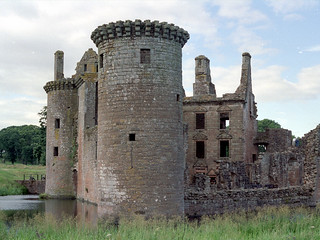
Caerlaverock Castle

Heritage Tourism or Ancestral Tourism

One thing to mention at the outset is that there is a difference between what we might call ‘heritage tourism’’ and ‘ancestral tourism’’. As an example, some people with the Maxwell surname may choose to visit Caerlaverock Castle, because (I quote from the Historic Scotland website) ‘around 1220, Alexander II of Scotland, needing trusted men to secure the Scottish West March, granted the estate to his chamberlain, Sir John de Maccuswell (Maxwell). Sir John built the ‘old’ castle. Within 50 years, his nephew, Sir Herbert, had moved to a new castle just 200m away to the north. There the Maxwell lords remained for the next 400 years.’ The reality is however, that many people with the Maxwell surname are not directly descended from these Maxwells.

One dictionary definition of genealogy is ‘A line of descent traced continuously from an ancestor’.

Your first mission, therefore, is to find out what type of experience your visitors want. Do they want to visit a castle once owned by someone of the same surname, or do they want to trace their own direct ancestors one by one as far back as they can?

If they want to trace their own genealogy, here are some resources and tips so that you can be better placed to help them:


Accommodation - What to offer the Ancestral Tourist

A good internet connection - A lot of family history research is done online these days. Many people will have their family tree online on websites like ancestry.com. This means a good internet connection is essential to family history research. If you can offer this as part as your accommodation package the ancestral tourist will likely find your accommodation a more appealing choice.


Reference books - For south west Scotland, I would recommend the guide produced by the Dumfries and Galloway Council, ‘Researching Local History - A Guide’ (available at £5.99 from most D&G libraries). I would also recommend the book ‘Tracing your Scottish Ancestors’ published by the National Records of Scotland. Other books such as ‘The Surnames of Scotland: Their Origin, Meaning and History’ by George Black may also be useful to visitors. If you want to have an even larger library for your visitors I would also recommend the books by Chris Paton.

Visit Scotland’s Ancestral Welcome Scheme - Participation in the Ancestral Welcome Scheme gives you the opportunity to publicise your knowledge and commitment to meeting the needs of the ancestral visitor. For more details see the Visit Scotland website.

Scotland’s People - www.scotlandspeople.gov.uk is the foremost website used in researching Scottish Ancestors online. They give access to the key building blocks of a family tree: Birth, Marriage, Death, Census and Parish Records as well as wills and some other key resources. The website is a ‘pay-per-view’ site (not a subscription website). Scottish libraries sell half price starter cards, giving 60 credits which can be used on the site for just £7 (the standard price is 30 credits for £7).


Once your visitors arrive

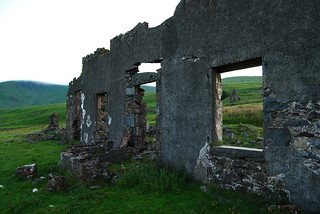
The Old School House at the long abandoned Woodhead lead mines, Carsphairn, Stewartry of Kirkcudbright.

Maps - People visit the area where their ancestors lived is to visit the homes they once occupied and visit their graves. If you are able to offer help by supplying maps this would really help your visitors. The National Library of Scotland has a fantastic collection of historic maps (many of which can be overlaid on modern maps for comparison) which could help them work out where a long demolished house once stood.

Archives - At the time of writing (August 2014) the main archive for Dumfries and Galloway is within the Ewart Library (Catherine Street, Dumfries, DG1 1JB). Access is free and you can use your digital camera to photograph many records (permission needed). Here are the opening times:

Archive Search Room Opening Times
Monday- CLOSED
Tuesday - 10.00 - 13.00, 14.00 - 17.00
Wednesday - 10.00 - 13.00, 14.00 - 19.00
Thursday - 10.00 - 13.00, 14.00 - 17.00
Friday - 10.00 - 13.00, 14.00 - 17.00
Saturday - 10.00 - 13.00, 14.00 - 16.00 (First Saturday in month only)

Important - Most archive material is stored off-site, you need to contact the archive a day or two in advance so that they can make sure the items you need are brought in for you.

The archive at Dumfries has records such as school log books, poor relief applications and minutes, valuation rolls and newspapers throughout D&G. They also have copies of the census for D&G on microfilm and also local pre-1855 parish records (OPRs). As well as providing access to these key resources they also have a genealogist who can help searchers; there is a fee for this service and booking is essential.

Dumfries Archive in the Ewart Library

Other archives and museums - Whilst the Ewart Library is the main repository, local museums and libraries throughout D&G can also be useful. They sometimes have original records, and in many cases have key resources in the form of printed transcripts and microform. Most importantly, though, they can provide local knowledge!  This map can help you find archives across Scotland. The guide book published by D&G council that I have already mentioned (Researching Local History - A Guide) includes a comprehensive list with contact details.

Online Indexes

Friends of the Archives of Dumfries and Galloway - A lot of work has been done by the Friends of the Archives of Dumfries and Galloway group to index historical records. These indexes include the 1851 Census, Dumfries Jail books, various Kirk Session Minutes, Poor Board Minutes and much more. All indexes are free to access from the archive’s website.


Scottish Indexes - Our own website www.scottishindexes.com has census indexes, prison indexes, patenity indexes, mental health indexes, as well as birth, marriage and death indexes.

Gravestones - The website www.kirkyards.co.uk has free online access to gravestones or Monumental Inscriptions for a number of churchyards in the Stewartry of Kirkcudbright. Its sister site www.kirkcudbright.co has an historical index of the people and places of the Stewartry of Kirkcubright and other useful local resources.


Family History Societies and Researchers

Dumfries and Galloway Family History Society - The society is run by volunteers and has its premises in Glasgow Street, Dumfries. The opening times vary between summer and winter so it’s best to look at their website for details. As well as being able to visit the research centre and use their resources you can also buy their publications.

Dumfriesshire and Galloway Natural History and Antiquarian Society - This society is perhaps more immediately thought of by the historian than the genealogist but as they are so closely connected I have included them in this list. Their website has an index to their transactions and many volumes are online.

Scottish Indexes - Most people these days are able to trace their own family tree, sometimes however they need some help. As well as providing indexes we also have a research service. Feel free however to give us a quick ring if you have people coming to stay and you need some advice on how to help them.

Scottish Genealogy Network - This is a group of professional genealogists working across Scotland. For more information see their blog.

If you have any questions please post a comment below and I’ll do my best to answer it.

Wednesday, 16 March 2011

22nd SAFHS Conference

We have just received confirmation for our stall at the 22nd Scottish Association of Family History Societies (SAFHS) Conference in Edinburgh on Saturday 25th June 2011, 09.30-16.30. The  the Conference will be Adam House, 3 Chambers Street, Edinburgh, EH1 1HR so if your able to attend pop in and see us. We’ll be giving free help and advice all day and we’ll have some of our books for you to look through.

Many other people will be there too: various family history societies, Families in British India Society,  Scotsman Archives, Tay Roots and many others.

For more information visit  the Scottish Genealogy Society’s website: http://www.scotsgenealogy.com/Conference.aspx

Hope to see you all there!

Friday, 25 February 2011

The closure of West Register House

As I sit in West Register House today I half expect to see tumbleweed roll along the search room floor. When I was in on Tuesday you could hear, in the background, the sound of staff sealing up boxes, deciding which computers and phones to take and reminding everybody that this is the last week that the West Search Room of the National Archives of Scotland will be open to the public. Today though there is just silence, stillness and a general sadness for what will be lost.

Since the start of the photography trial last spring I’ve spent a lot of time here and it’s been a very pleasant place to work. As this is the less used search room there is a more peaceful atmosphere. Staff are relaxed and on hand to help, the desks are modern and the lamps well placed. There is more space, you generally have about two desks each so plenty of room for books on cushions, laptops and notebooks.

There is also a camera stand available in this search room, which means we have high quality images and I can take them very quickly. We hope the stand will be available from Monday onwards at General Register House, as from that day on we will all be able to take photographs in the Historic Search Room there - which will a momentous day!

The rationale for having just one search room is sensible to a degree, they will save money and we won’t have to go to two venues to see documents. With more and more information on the Virtual Volumes system, the need for as many desks will I suppose have reduced. The Virtual Volumes system is where you can view documents that have been digitally imaged on the computer screen. This makes access easier and reduces the risk of damage to the documents.

I am sad however that this is my last week in the wonderfully tranquil West Register House and would like to thank all the staff that help bring these historical documents to us, whether they are on the front desk, in the search room or behind the scenes, they all do a fantastic job. Without them our Kelso Dispensary project, our prison records project and poor roll projects would not be happening, not to mention the exciting new projects we have planned for later this year. This means that even if you haven’t been here yourself they have helped all of you delve into your family’s past.

Thank you West Register House!

Sunday, 20 February 2011

Holywood 1841 census added to the database

We have added the 1841 census for Holywood to our database and of course it’s available in our bookshop too. Here are the surnames which appear in the census:

Adamson; Ademson; Afflick; Anderson; Atchison; Auchterson; Austin; Baird; Ballantine; Ballintine; Beatie; Beattie; Bell; Bickerstaff; Bilby; Black; Blackie; Blackley; Blacklock; Blain; Borthwick; Boyes; Briggs; Broatch; Brodie; Brown; Bryden; Brydon; Burges; Burgess; Callander; Cambell; Campbell; Carid; Carr; Carruthers; Carson; Caven; Charters; Clark; Clemison; Clifford; Clune; Colvin; Conal; Conchie; Connal; Connan; Connell; Corrie; Corson; Costine; Coston; Cowan; Craig; Creighton; Creiry; Crocket; Croket; Crone; Crosbie; Cunninham; Dalrymple; Dickson; Dinwiddie; Douglas; Drummond; Duff; Dunn; Easton; Edgar; Elton; Fair; Farish; Fenton; Ferguson; Fergusson; Ferquher; Flinn; Flynn; Frazer; Gaffeny; Gass; Gedess; Gemmell; Gibbs; Gibson; Gillespie; Glencross; Glendining; Glendinning; Glover; Gordon; Gourley; Gracie; Graham; Greirson; Grerson; Grier; Gunion; Hair; Haliday; Hamilton; Hannah; Hannay; Hastings; Hawthorn; Henderson; Henry; Hepburn; Hiddelston; Hiddleston; Hill; Hodge; Hyslop; Inglis; Irvine; Irving; Jardine; Johnson; Johnston; Johnstone; Kellock; Kenedy; Kennedy; Kilpatrick; Kirk; Kirkpaterick; Kirkpatrick; Kirkwood; Kirpatrick; Landsburgh; Laurie; Lawrie; Lawson; Lennox; Lewis; Lindsay; Little; Livingstone; Lockerby; Loremer; Lorimar; Marshal; Marshall; Mason; Masterman; Mather; Maxwel; Maxwell; McAdam; Mcally; McBurney; McBurnie; McCaig; McCall; McCalley; McCloury; McCornick; McCubbing; McFeggan; McGeorge; McGill; McKaig; McKenery; McKenzie; McKinnel; McKnight; McMichael; McMichan; McMurray; McMurry; McNae; McNaught; McNeil; McQueen; Meighan; Melvin; Middelton; Millar; Miller; Milligan; Monteith; More; Moreland; Morine; Morrow; Muir; Muirhead; Mullholland; Mullins; Murdoch; Nealson; Neilson; Nelson; Newall; Nicholson; Nicol; Norval; Oliver; Pagan; Paterson; Patrick; Pearson; Peary; Piles; Porteous; Pots; Rae; Ramage; Ramge; Renewick; Richardson; Riddell; Ritchie; Robson; Roddan; Roden; Rorrison; Saffely; Sanders; Saunders; Scott; Seaton; Servace; Simson; Smith; Somerville; Souland; Spence; Stitt; Swan; Tait; Taylor; Thompson; Thomson; Thorburn; Threshie; Todd; Turner; Twineholm; Walch; Walker; Ward; Waters; Watson; Waugh; Welch; Welsh; Whitehead; Wightman; Wilson; Wright

Search for free or buy a book for your library!

Monday, 14 February 2011

1841 Hoddom and 1851 Mochrum now online

We updated the census database last week; it now includes the 1841 census of Hoddom, Dumfriesshire and 1851 census Mochrum, Wigtownshire. As usual these new census transcriptions are also available in our bookshop.

As usual there are also various new household links, maps and notes that we hope will help you as you research families in Scotland.


Monday, 31 January 2011

Report and State of the Kelso Dispensary

When I was in the National archives the other day I came across some leaflets entitled Report and State of The Kelso Dispensary. I found it useful to help me understand the daily running of the dispensary. Here is a transcription of the front page of the leaflet:


Report and State
of
The Kelso Dispensary

77th Year of the Institution


The Physicians and Surgeons connected with the Institution attend the Dispensary every Sunday before Divine Service, and every Friday form nine to eleven o’clock, to give their advice, and to direct the Apothecary of the Dispensary (who also attends on these days), to dispense such Medicines as are proper for the Patients recommended. In cases of acute, and occasionally in chronic disease, when Patients cannot be brought to the Dispensary, the Surgeons of the Institution are allowed, at the recommendation of a Subscriber, to visit them in the country at the expense of the Charity, in terms of the following rule of the Institution, viz., “That no one be visited in the country who can be brought by any conveyance to the Dispensary without personal hazard; that when in cases of sickness or accident it becomes necessary for the Surgeons to visit a Patient in the country, the visit shall not be repeated at the Surgeon’s discretion for a longer period than till the first ordinary Meeting of Physicians, Surgeons, and other Office-bearers; at which Meeting it shall be incumbent on the Visiting Surgeon to report the case, and after consultation it will be in the power of he Meeting either to order a continuation of visits for a limited time, or a notification to be made to the Patient that he must be brought to the Dispensary in Kelso–it being always kept in view that the expense of these visits, to be borne by the Institution shall not exceed triple the sum subscribed by the recommender.” Patients in the town of Kelso may be visited in their own homes by the Apothecary to the Institution, upon an order from the Physicians or Surgeons to do so. All recommendatory letters to be addressed, “To the Apothecary of the Kelso Dispensary,” who is appointed to deliver the same to the Surgeons in rotation.

No Patient will be visited in the country at the expense of the Institution, unless a visit is solicited by a Subscriber, or ordered by the Physicians. The other regulations under which the dispensary is managed, and the rules by which proper objects of charity are recommended are entitled to the benefit of the Institution, will be furnished by the secretary. 

There is a record kept of the Patients, their ages, diseases, the event of their case, the names id the Subscribers, and the parishes to which they belong. There have been 715 admitted for the year from the 1st October 1853, to the 1st October, 1854.

BATHS

There is one Bath kept exclusively for the Patients of the Dispensary; another, handsomely fitted up with marble for the accommodation of the Public. Baths may be had at one hour’s notice, on application to the Housekeeper, for payment of 1s. Hot Bath, and 6d. Cold and Shower Bath, which sums go toward the support of the Charity.


© Kelso dispensary data - Crown copyright. National Archives of Scotland reference HH71/5.
© Transcription — Copyright Graham Maxwell Ancestry 2011.

Saturday, 22 January 2011

Free Castleton Poor Roll Index

We have just uploaded another PDF to our website, the Index to Castleton Poor Roll 1846-1864. Although quite interesting itself the index is a key to further information.

The full record has lists of children of the recipient as well as details relating to emigration, employment and education. The columns in the original book are as follows:

  1. Name of Pauper
  2. Present residence
  3. Married or single, widow, or widower. If child, orphan, deserted or bastard.
  4. Name of each dependant living with Pauper
  5. Age – Years
  6. Place of birth
  7. Trade or occupation
  8. If wholly or partially disabled
  9. Description of disablement
  10. Means and resources of Pauper besides Parochial relief
  11. Names and weekly earnings of Parents
  12. Names, ages, and earnings of children not living with Pauper, and whether marries, and number of children.
  13. Date when admitted on Roll.
  14. Amount of relief in money.
  15. Amount of relief in food, clothing, fuel, lodging, or of any other kind.
  16. Date and cause of removal from Roll.
  17. Remarks

So as you can see the form was quite detailed, sadly not all entries have every column filled in but all the entries are of interest if they are related to you!


Saturday, 15 January 2011

Kelso Dispensary Year One PDF

Well I have another treat for everybody today: a full transcription of year one of the Kelso Dispensary patient records is online and FREE. These records are fantastic! They can link families back to the early 1700’s and beyond in some cases, as well as giving some colour to your family tree. What was your ancestor really like? See, for example Agnes Fairbairn of Smailholm, born about 1747 recorded in the register with a case of Hystericks. Alternatively you could be related to Christian Burn who had Flatulent Pains!

From a more genealogical point of view, there are also some dates of death recorded which may well not be recorded elsewhere. A bit of Google searching may be necessary for identify some of the archaic names for diseases.

I hope you find this register as fascinating as we have, once we finish the first volume we’ll make it available in our bookshop. We’re not sure on the cost yet but we’ll keep you all informed.


Tuesday, 11 January 2011

What’s New at Maxwell Ancestry?

We have added to our website today an index to our prison database. This will hopefully make it easier for you to find which book you need or purchase or enable you to order a full transcription of the prison record directly.

Why buy the book?

The prison books that have been available in our bookshop for some time have all the information that is online and in addition they also list the crime (the thing we all want to know) that the prisoner committed. If you see more than one record relating to your family this is a cheaper way of finding out what crimes were being committed.

Why buy the full record?

The original entries are very informative and cost just five pounds. Typically in any record after 1840 you would expect to find at least the following:
Date of admission; By whom committed; Name; Sex; Age; Birthplace; Residence; Where spent greater part of their life; Height; Hair colour; Eye colour;
Distinguishing marks etc.; Precise offence (often including article stolen etc.); Clean/dirty; Drunk/sober; Direct from arrest or from another prison,
if so which one; Occupation; Previous imprisonments with entry numbers for such; Liberated without trial – when and by whose authority; Tried – when
and by whom; Convicted or acquitted; Sentence; Liberated or removed after conviction – when, by whose authority, to what place; Number of days in
prison; Conduct during confinement; Whether able to read and write.

So whichever way you buy further information we hope that this new database will prove useful to all. Search it at: www.maxwellancestry.com

Friday, 24 September 2010

Pigeons faster than broadband!

Whilst many of us now enjoy very fast broadband I know from our website survey that many of our customers are not quite as fortunate. This article on the BBC news website amused me: http://www.bbc.co.uk/news/technology-11325452

It may seem funny to those of us on high speed broadband but perhaps a little too close to home if you are trying to download images from Scotland’s people, Ancestry or even our own website with a poor internet connection. For this reason all our free resources are available at a very low cost on CD. So if you are struggling to download some of our material send me an email and I will do my best to help you out.

Tuesday, 13 April 2010

1851 census for Kells now online

We have been making great progress with www.maxwellancestry.com. Various new records are now online and more will be coming shortly as well as new books, some of which will be ready in the next day or two.

The big census update is 1851 Kells, Kirkcudbrightshire; this is now in the database and also available from our bookshop. We have also added more household links, general notes and prison links to the database.

Regarding the prison indexing project, Graham has now indexed the second Jedburgh volume and is proof-reading it now so it should be on sale within a couple of weeks. He has now also started work on the next Scottish Borders prison, which is Kelso. Although various links will appear in the census database from now this is not by any means a search of the prison registers themselves. In fact less than 1% of the prison entries have any link with the census records at present. Therefore if your ancestors are from the Borders area it is best to check in the actual prison index. If you do not already have a copy they are available from our bookshop.

The mapping is also continuing, Hawick and Wilton parishes are next, these may take some time though! Big towns always seem to slow up the census mapping project!

I’ll let you know when the new Jedburgh prison book is ready.